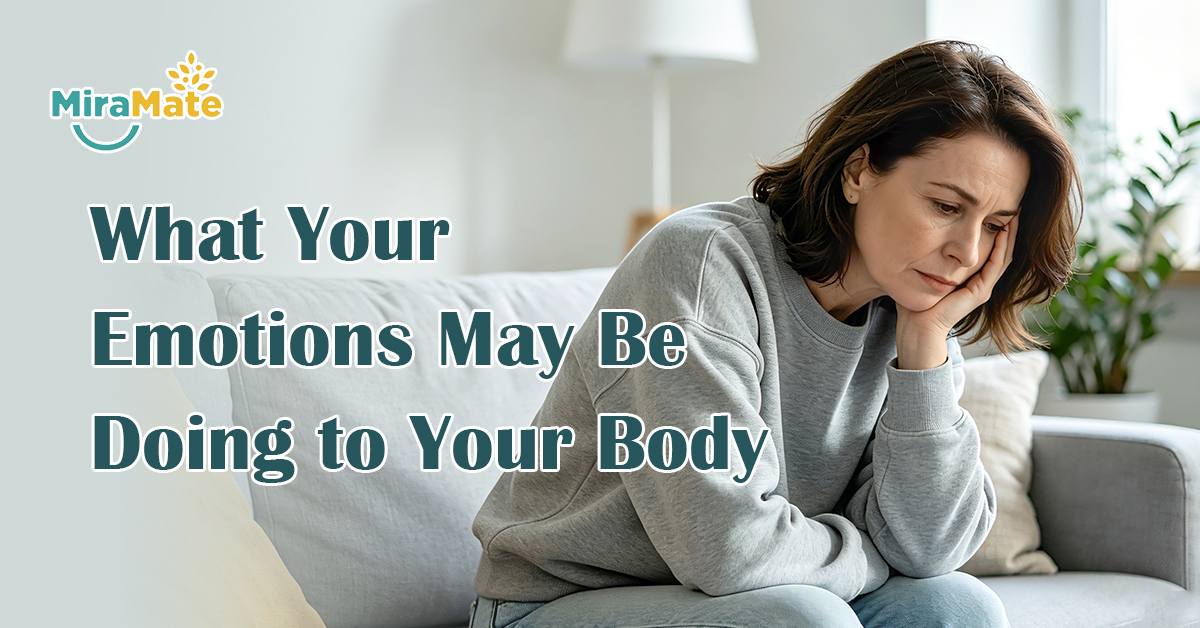
People often talk about anger as if it belongs only to the mind. A bad mood. A sharp reply. A difficult day. Something private and temporary.
But that is not how the body experiences it.
Anger is not just a feeling. It is a physiological event. It changes breathing, muscle tone, heart rhythm, sleep quality, digestive comfort, and the way the nervous system handles pressure. That is why unresolved emotion can start to feel physical very quickly. The body does not merely witness emotion. It absorbs it.
And anger is only one example.
When Emotion Becomes a Body Pattern
Think about what happens when you get angry. Your jaw tightens. Your shoulders rise. Your breathing shortens. Your chest may feel hot or constricted. Your thoughts speed up. Even if you stay silent, the body has already shifted.
That shift is not random. It is the nervous system moving into a defensive state.
In small doses, that is part of being human. The real problem begins when the body never fully returns to baseline. Some people are not dealing with one moment of anger. They are living in a pattern of irritation, suppression, resentment, pressure, or emotional overload that repeats often enough to become their normal.
Once that happens, the issue is no longer just emotional in the narrow sense. It becomes regulatory.
A useful way to think about it is this: one emotional event is like pulling a rope tight. That is manageable. But if the rope stays under tension day after day, it stops behaving the same way. It loses elasticity. The body does too. Chronic emotional strain does not always announce itself dramatically. It often shows up as poor sleep, muscle tension, headaches, shallow breathing, digestive instability, reduced patience, and the quiet feeling that recovery never fully happens.
Different Emotions Affect the Body Differently
Not all emotions land in the body in the same way.
Anger is activating. It tends to push upward and outward. People often feel it in the head, neck, shoulders, jaw, and chest. It can show up as tension, pressure, restlessness, irritability, or trouble winding down at night.
Anxiety behaves differently. It is usually less explosive and more continuous. It keeps the body scanning. That can feel like shallow breathing, a racing mind, digestive sensitivity, poor sleep, and the sense that the system is always half on alert.
Suppressed emotion is different again. This is where the body can start to feel heavy, flat, or strangely disconnected. A person may appear calm, but internally they feel tired, foggy, low, and difficult to restore. This kind of emotional burden often builds slowly. It drains energy without much drama.
Sadness can soften the system, but in a prolonged form it may also affect sleep, appetite, motivation, and the body’s general responsiveness. It can make everything feel slower.
So when someone says, “I know this is emotional, but I feel it in my whole body,” that is usually a very accurate description. They are not imagining symptoms. They are noticing what happens when emotional strain becomes a nervous-system pattern.
What Long-Term Emotional Strain Actually Does

The body is designed to move between activation and recovery. Stress rises, then settles. Effort happens, then repair follows. That movement is part of healthy regulation.
Long-term emotional strain interferes with that cycle.
This is where people often start to feel trapped in a loop. They are tired but cannot fully rest. They sleep but do not feel restored. Their muscles stay tense even while sitting still. Their tolerance for stress gets thinner. Small problems feel larger than they should. The body may feel overstimulated and depleted at the same time.
The common thread is unfinished recovery.
When the nervous system spends too much time in a state of defense, the body allocates more resources to protection and less to repair. Over time, that affects sleep quality, resilience, concentration, muscular ease, and the ability to return to calm after stress. It is not simply that a person is “too emotional.” It is that the body has been carrying an unresolved load for too long.
Why Regulation Has to Be Physical Too
This is why emotional well-being cannot always be improved by mindset alone.
Sometimes the mind wants to settle, but the body is still bracing. A person may genuinely want to relax, but their nervous system is still behaving as though something is wrong. In that state, the body often needs support before deeper recovery can happen.
That is one reason PEMF has become part of more conversations around stress, regulation, and recovery. Its role is not to solve the emotional story itself. Its role is to support the body’s ability to shift out of chronic strain and back toward a more recoverable state.
That distinction matters.
Where Magic Pro Fits In
This is also where a system like Magic Pro becomes relevant in a more concrete way. Emotional overload rarely stays local. It becomes a whole-body pattern, which is why a full-body system makes more sense here than a small point-use device.
Magic Pro is built as a full-body PEMF system rather than a small point-use device. Its 96-coil layout helps create more even coverage across the body, with each coil reaching up to 1013.3 gauss peak output. It also includes 30 built-in programs, giving it a more structured approach to recovery, relaxation, and daily regulation.
That matters because emotional strain rarely stays in one place. It tends to show up as a whole-body pattern: tighter muscles, poorer sleep, lower resilience, and a nervous system that struggles to fully switch off. That is where Magic Pro’s 96-coil full-body design becomes relevant. Instead of focusing output on one small area, it is built to create more even coverage across the body, which makes more sense for broader patterns of tension and overload.
The point is not that emotion should be “fixed” by a device. The point is that when emotional strain becomes a body-wide state, body-wide support becomes a more rational place to start.
Conclusion
In the end, anger is never just emotional. Neither is anxiety. Neither is long-term suppression. When emotional strain becomes constant, the body pays for it in real ways. That is why recovery has to be physical as well as mental.
Sometimes the first meaningful shift is not forcing calm. It is helping the body remember what calm feels like.
We also warmly welcome you to join our Facebook group and register for our newsletter for our latest news and promotions.
If you’ve been thinking about bringing home Magic Pro, our sale is almost over. Shop now.