
Whether it’s a nagging ache in your knee after a morning in the garden, persistent stiffness when you get out of bed, or that familiar soreness following an evening walk with your grandkids, daily joint discomfort can slowly quiet down the activities you love most.
If you’ve been searching for gentle, natural ways to keep your body moving comfortably, you may have come across PEMF therapy (Pulsed Electromagnetic Field therapy). But with so much noise on the internet, it’s fair to ask: Is PEMF actually good for inflammation, or is it just another wellness trend?
Let’s skip the clinical jargon and break down what inflammation really is, how PEMF works at a microscopic level, and what science and practical daily use tell us about it.
Understanding Inflammation: Your Body's Alarm System
Think of inflammation as your body’s internal security system. When you twist an ankle or strain a shoulder, your immune system rushes resources to the area to protect and repair it. This is acute inflammation, and it’s a healthy, essential part of healing.
However, as we age, that alarm system sometimes gets stuck on “low alert.” Ongoing wear and tear on joints, old injuries, or daily physical stress can lead to lingering, low-grade discomfort. Instead of protecting you, this constant swelling leaves your joints feeling stiff, tired, and heavy.
How PEMF Works: Recharging Your Cellular Batteries
Every cell in your body carries a small electrical charge, much like a tiny battery. When tissue becomes fatigued or swollen, these cellular batteries lose their charge. As a result, nutrients have a harder time getting into the cell, and cellular waste products take longer to clear out.
PEMF stands for Pulsed Electromagnetic Field.
Instead of delivering heat or direct electric shocks, a PEMF device emits gentle, soothing magnetic pulses that easily pass through skin, muscle, and bone.
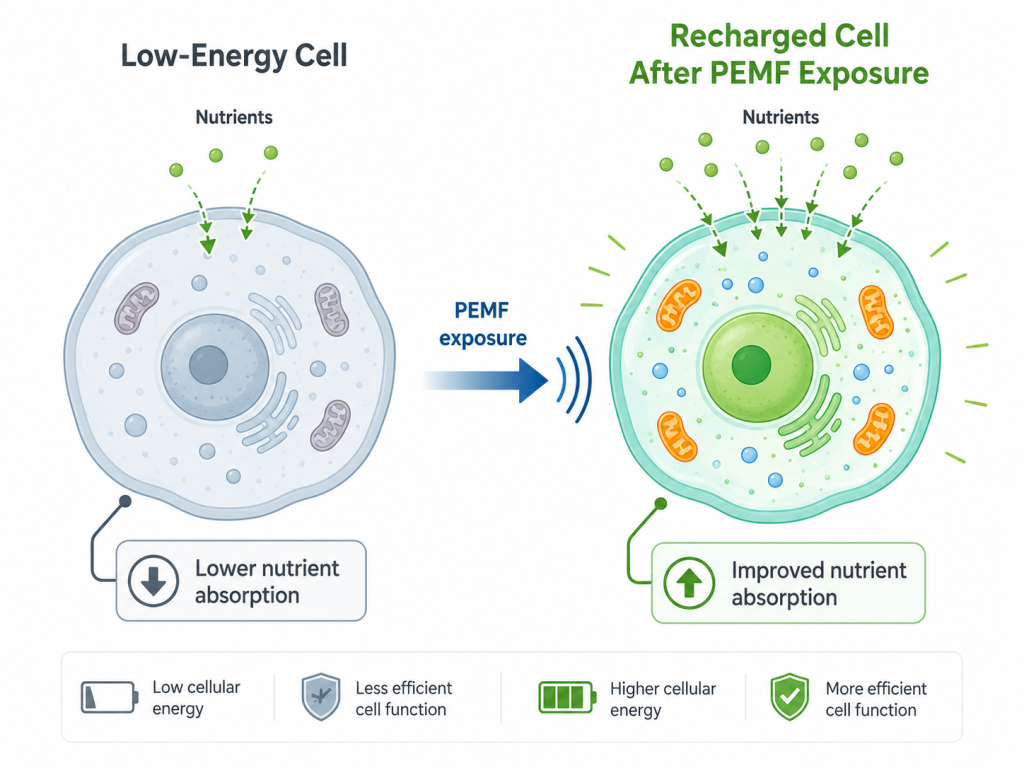
Think of PEMF as a wireless charger for your cells.
When these subtle magnetic waves pulse through your tissue, they help restore the natural electrical potential of your cellular membranes. Research published in scientific literature—including studies archived by the National Institutes of Health suggests that low-frequency PEMF exposure can help regulate inflammatory pathways, promote localized circulation, and support tissue recovery without invasive procedures.
What Does PEMF Do for Daily Joint Comfort?
When your cells are properly “recharged,” your body can do what it does best: self-repair and restore balance. Here is what users frequently experience when incorporating PEMF into their wellness routines:
1. Easing Morning Stiffness
By supporting microcirculation and cellular exchange, PEMF helps calm down persistent tissue irritation, making it easier to bend your knees, flex your hands, or stretch out your back in the morning.
2. Supporting Natural Tissue Recovery
Whether you’ve been spending hours working on a project around the house or walking around the neighborhood, targeted magnetic pulses help quiet localized discomfort and promote faster recovery.
3. Non-Invasive and Relaxation-Friendly
Unlike intense therapies, gentle low-frequency PEMF is completely non-invasive. Most people feel nothing at all during a session, or at most a subtle, relaxing sensation of warmth and calm.
Finding the Right Balance: Integrating PEMF Into Daily Life
At MiraMate, after years of looking at user data and engineering feedback, the evidence shows that the most effective approach to managing long-term discomfort is a combination of both broad cellular support and targeted, immediate relief.
Because chronic inflammation can affect the entire system while still causing acute, localized pain in specific joints, a comprehensive routine generally yields the best results.
MiraMate Mini Magic: Targeted, On-the-Go Relief
For localized discomfort that requires immediate attention, the Mini Magic offers a highly practical solution. This device is completely portable, lightweight, and engineered for ready-to-use application. Its flexible coils can be wrapped around a specific area—such as a stiff knee, an aching wrist, or the lower back. Because it operates quietly and fits easily into a pocket, it allows individuals to maintain their cellular support continuously while driving, reading, or working.

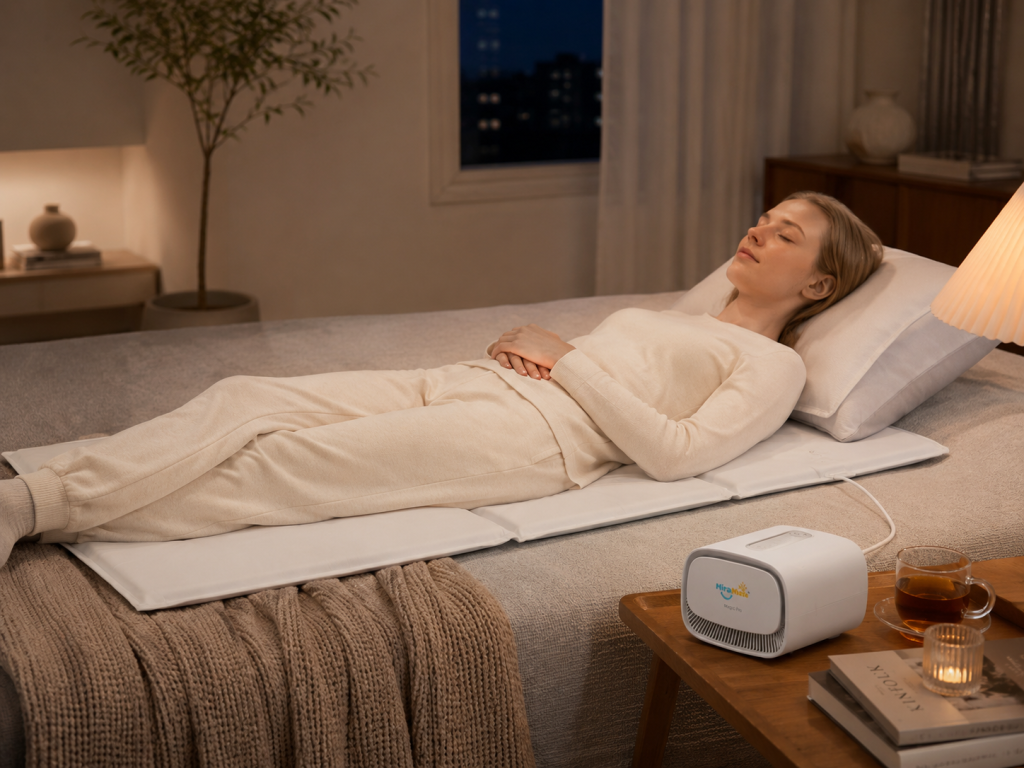
MiraMate Magic Pro: A Dedicated Full-Body Healing Space
While targeted therapy addresses specific acute areas, systemic recovery requires a broader approach. The Magic Pro full-body mat is designed to serve as a comprehensive at-home wellness space. Developed in coordination with frequency experts, the system includes 30 curated programs designed to support long-term relief, encourage deep relaxation, improve sleep quality, and boost overall cellular energy. Daily sessions on the mat allow the magnetic pulses to penetrate deeply throughout the entire body, addressing systemic stiffness at the source.
Optimizing Recovery: The Ultimate PEMF Kit
From a practical standpoint, these two systems are designed to complement one another. The Magic Pro provides a deep, full-body foundation during periods of rest at home, while the Mini Magic ensures that targeted relief is always available throughout the day.
To make implementing a complete routine more straightforward, these two systems are available together as the Ultimate PEMF Kit. Choosing the combined package provides a comprehensive approach to managing physical wellness while offering a direct savings of $170 compared to purchasing the Magic Pro and Mini Magic separately. It represents a practical, evidence-based investment in long-term mobility and comfort.
Conclusion
Is PEMF good for inflammation? Science and real-world experience show that low-frequency pulsed electromagnetic fields provide a safe, gentle, and effective way to help manage daily swelling, support joint flexibility, and aid cellular energy.
Instead of just coping with stiff joints as an inevitable part of getting older, giving your cells the extra support they need can help you get back to doing the things you love—with a bit more spring in your step.