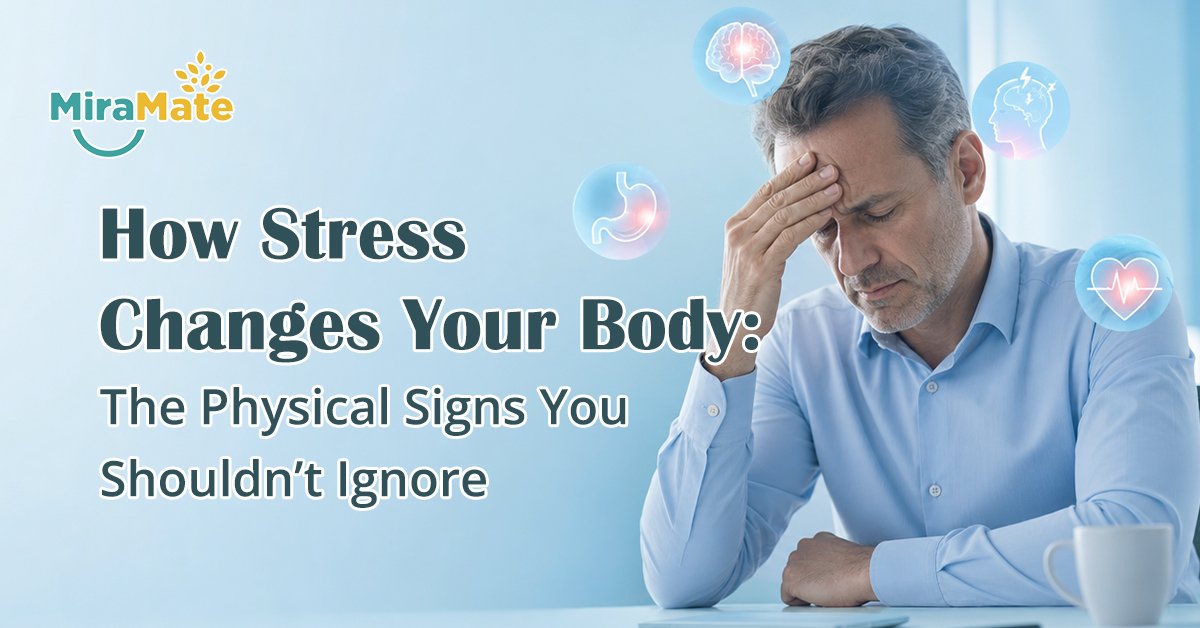
You slept seven hours, but you wake up tired. Your shoulders feel tight before you even sit down at your desk. By mid-afternoon, your stomach is off, and by evening, you’re too wired to fall asleep easily.
If this sounds familiar, your body may be telling you something worth listening to. Stress isn’t just a feeling. It’s a full-body response with physical consequences — and after 40, those consequences tend to show up more clearly.
What Actually Happens When You're Stressed
When your brain perceives a challenge — a deadline, a difficult conversation, even a crowded grocery store — it activates what researchers call the “fight or flight” response. Your body releases adrenaline and cortisol, two hormones designed to help you react quickly and stay alert.
In short bursts, this system works well. It sharpens focus, raises blood sugar for quick energy, and prepares your muscles for action.
The problem is when stress becomes chronic. When that response stays switched on for weeks or months, the same hormones that once helped you now begin to wear on your system.
The Signs Your Body May Be Showing You
Stress doesn’t always announce itself as anxiety. Often, it shows up physically first.
Muscle Tension and Headaches
Your muscles tighten as part of the stress response — that’s protective in the short term. But when stress is ongoing, that tension lingers. Common results include tightness in the neck, shoulders, and jaw, tension headaches, and soreness that doesn’t seem related to exercise.
Digestive Changes
Your gut is closely connected to your brain through what scientists call the gut-brain axis. During stress, blood flow shifts away from digestion toward muscles needed for action. Over time, this can contribute to bloating, changes in appetite, constipation, or loose stools.
Sleep That Doesn’t Restore
Cortisol normally follows a daily rhythm — higher in the morning to help you wake up, lower at night to help you wind down. Chronic stress can keep cortisol elevated in the evening, making it harder to fall asleep and stay asleep.
Fatigue That Doesn’t Match Your Effort
Many adults in their 40s and 50s describe a kind of tiredness that rest doesn’t fix. This can be linked to the cumulative effect of stress hormones on energy regulation, sleep quality, and recovery.
What Helps: Practical Steps You Can Take

You don’t need to overhaul your life to support your body’s stress response. Small, consistent habits often make the biggest difference.
1. Build a consistent sleep schedule. Going to bed and waking up at roughly the same time each day helps support your body’s natural cortisol rhythm.
2. Move your body daily. A 20-minute walk — ideally outdoors — can help support mood and relaxation.
3. Try brief breathing practices. Slow, even breathing activates the parasympathetic nervous system, your body’s “rest and digest” mode. Even five minutes can help.
4. Protect mealtimes. Eating at regular intervals with balanced nutrients supports stable blood sugar, which in turn supports a steadier stress response.
5. Create a wind-down routine. Dim lights, screens off, and a predictable sequence of activities before bed signal to your body that it’s time to shift gears.
These habits form the foundation. For some people, adding a supportive tool to that routine can make consistency easier.
Where PEMF Fits Into a Wellness Routine
PEMF — short for Pulsed Electromagnetic Field — is a technology that uses low-frequency electromagnetic pulses to support the body’s natural recovery processes. It’s non-invasive and typically used in short, comfortable sessions.
The idea behind PEMF is straightforward: your body already responds to electromagnetic signals. Your heart and brain both generate them. PEMF devices deliver gentle pulses that can be used as part of a broader wellness routine to encourage relaxation and everyday comfort.
Think of it as one optional tool among many — something to try if it fits your routine and feels supportive.
MiraMate’s Magic Pro is a full-body PEMF system designed to make that supportive technology easy to incorporate into daily life. It uses 96 coils and generates analog PEMF from audio, meaning it can convert sound — music, nature sounds, or guided programs — into gentle magnetic pulses that accompany whatever you’re listening to.
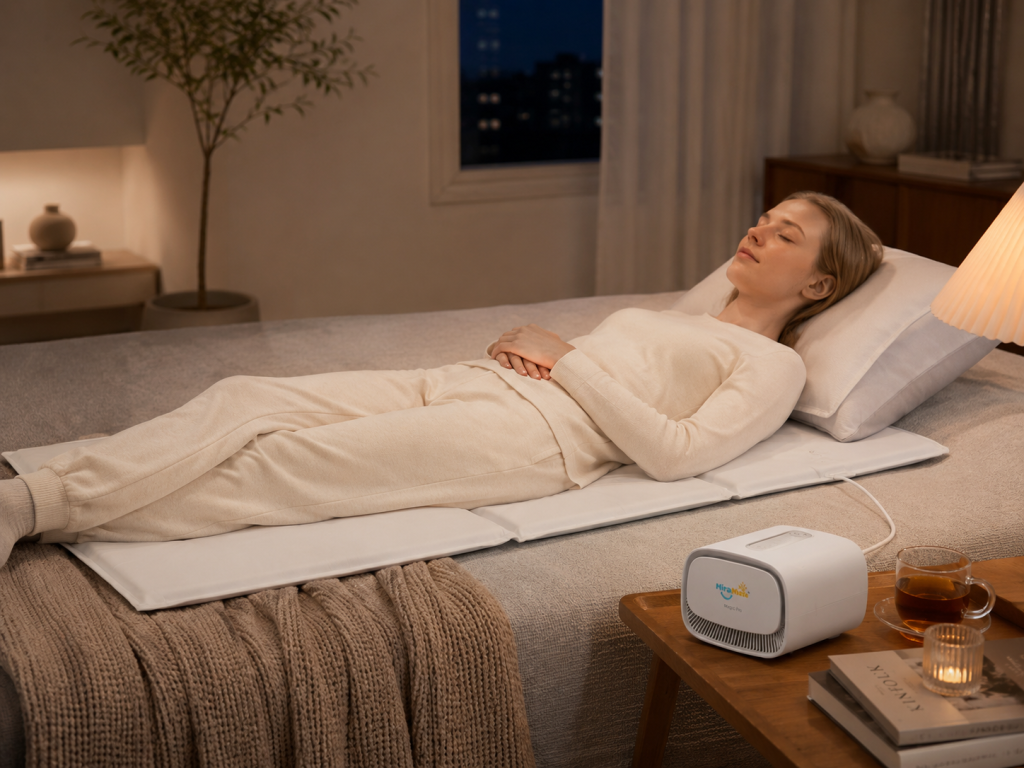
For stress-related routines, the format matters. Because Magic Pro is a full-body system, you can lie down on it while listening to calming audio, which naturally pairs with wind-down habits like reading, breathing exercises, or quiet rest. It includes 30 curated programs in Mindful Audio, giving you options for different times of day — a calmer session in the evening, for example, or a more grounding one in the morning.
The point isn’t to add another task to your day. It’s to make an existing habit — the 15 or 20 minutes you already set aside to relax — a little more structured and supportive.
The Real Goal: Consistency
MiraMate’s Magic Pro is a full-body PEMF system designed to make that supportive technology easy to incorporate into daily life. It uses 96 coils and generates analog PEMF from audio, meaning it can convert sound — music, nature sounds, or guided programs — into gentle magnetic pulses that accompany whatever you’re listening to.
For stress-related routines, the format matters. Because Magic Pro is a full-body system, you can lie down on it while listening to calming audio, which naturally pairs with wind-down habits like reading, breathing exercises, or quiet rest. It includes 30 curated programs in Mindful Audio, giving you options for different times of day — a calmer session in the evening, for example, or a more grounding one in the morning.
The point isn’t to add another task to your day. It’s to make an existing habit — the 15 or 20 minutes you already set aside to relax — a little more structured and supportive.