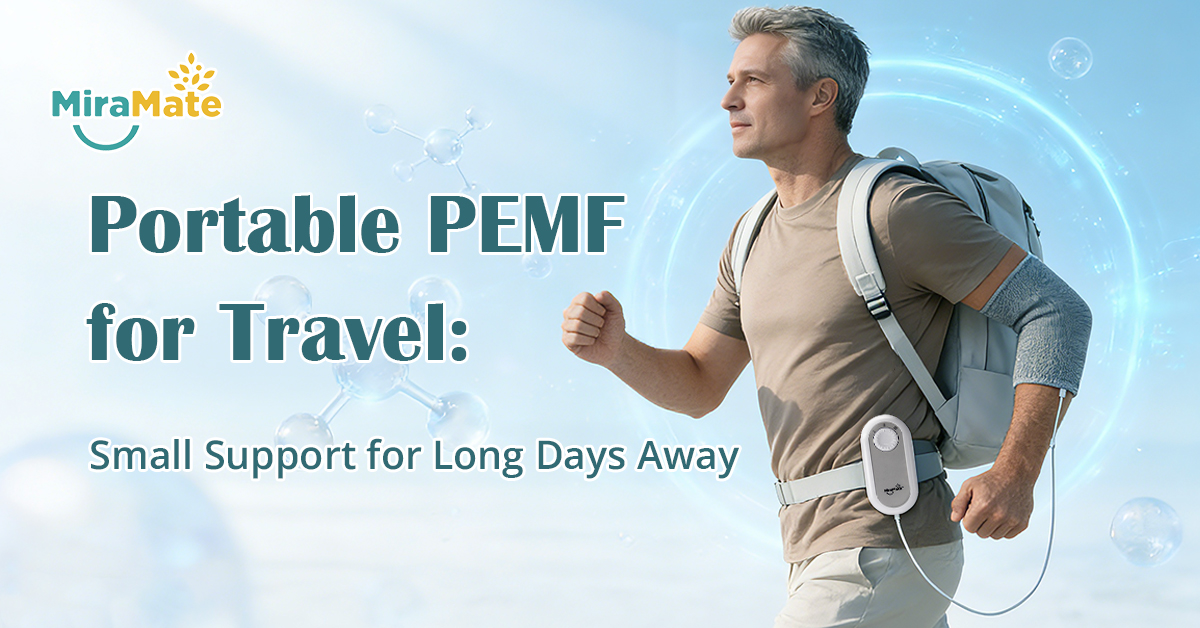
Travel is supposed to feel exciting. Sometimes it does. Sometimes it also leaves the body feeling strangely exhausted.
You wake up in a beautiful place, but your neck feels tight from the flight. Your lower back feels different after hours in the car. Your legs feel heavy after walking all day. Sleep becomes lighter, recovery feels slower, and by the third or fourth day, the body starts reminding you that movement, even enjoyable movement, still creates physical stress.
Most travel fatigue is not dramatic. It is cumulative.
A little less sleep. A little more walking. A little more sitting. Different food. Different beds. Different rhythms.
And eventually the body starts asking for support.
Travel Changes More Than We Realize
One of the interesting things about travel is that it affects almost every recovery system at once.
Long flights reduce movement for hours. Road trips compress posture and circulation. Hotel sleep rarely feels exactly like home. Even something simple like dragging luggage through airports creates repetitive strain on the shoulders, wrists, and lower back.
Then there is the nervous system side of travel.
Airports, schedules, unfamiliar environments, constant stimulation, noise, navigation, social activity — even positive experiences require adaptation. Many people notice they do not fully relax while traveling, even when they are technically “on vacation.”
The body remains slightly alert.
That low-level stress often shows up physically:
- Tight muscles
- Poor recovery
- Feeling heavy or stiff
- Restless sleep
- General physical tension
- Fatigue that feels hard to shake
Not because something is seriously wrong, but because the body has been working harder than usual for several days in a row.
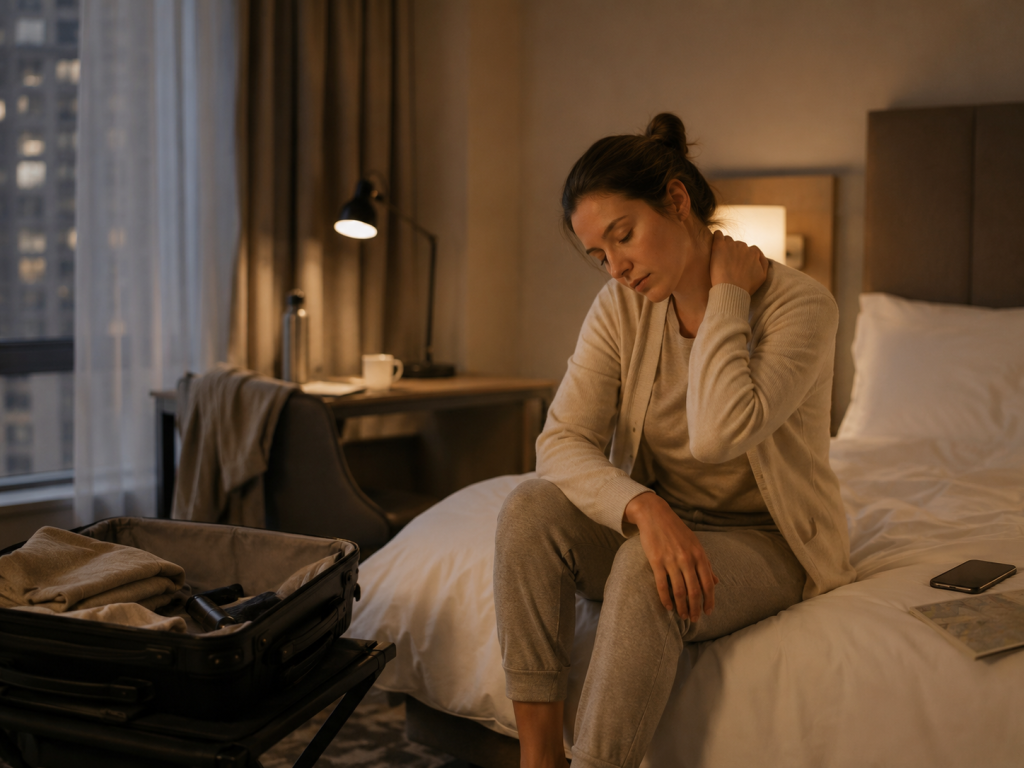
Why Recovery Habits Matter More During Travel
At home, recovery happens automatically in many small ways.
You sleep in the same bed. Your posture changes throughout the day. Your routines are familiar. Your nervous system knows the environment.
Travel removes many of those stabilizing patterns at once.
That is why experienced travelers often become more intentional about recovery:
- Stretching more
- Walking differently
- Prioritizing hydration
- Creating evening wind-down routines
- Paying attention to circulation and muscle tension
- Bringing small wellness tools with them instead of waiting until they get home
The goal is rarely perfection.
It is simply keeping the body from accumulating too much stress too quickly.
The Shift Toward Portable Wellness
One reason portable wellness devices have become more common in travel routines is practicality.
Most people are not going to bring large recovery equipment onto a plane or build a complicated wellness setup inside a hotel room. Travel rewards simplicity.
The tools people actually use while traveling tend to be:
- Lightweight
- Flexible
- Easy to pack
- Easy to use consistently
- Useful in short sessions
This is one reason portable PEMF devices have gradually become part of some travelers’ routines.
Not because travel suddenly becomes pain-free, but because localized support can feel useful after long periods of sitting, walking, carrying, or physical tension.
For some people, it becomes part of the transition between activity and recovery.
Why Localized Support Makes Sense on the Road
Travel stress is often uneven.
One day it is the neck after a flight. The next day it is the knees after walking through a city all day. Another day it may simply be the lower back after hours in transit.
Localized support fits naturally into these kinds of situations because the body rarely needs “everything” at once while traveling. Often it is one or two areas asking for attention.
That is why smaller PEMF devices tend to work well in travel environments:
- They are easy to carry
- Easy to use briefly
- Easy to integrate into real schedules
- Easy to use in hotels, cars, or quiet moments between activities
Not as a replacement for rest, movement, or sleep — but as another layer of support while away from normal routines.
The Evening Recovery Ritual Many Travelers Eventually Develop
Something interesting happens after enough travel experience.
People stop focusing only on the destination and start caring more about how they feel during the trip itself.
That often changes evening routines.
Instead of collapsing into bed immediately after a long day, many travelers begin building small recovery habits:
- Stretching
- Hydration
- Quiet time away from screens
- Breathwork
- Gentle movement
- Localized recovery support
Not because the body is “broken,” but because recovery feels noticeably better when the nervous system is allowed to slow down before sleep.
Even ten or twenty minutes of intentional recovery can sometimes change how the next day feels physically.
Where Mini Magic Fits Into This Lifestyle
Mini Magic was designed around that kind of real-world flexibility.
Rather than being something that only belongs in a dedicated wellness room at home, it was built to fit naturally into movement-heavy lifestyles where portability matters.
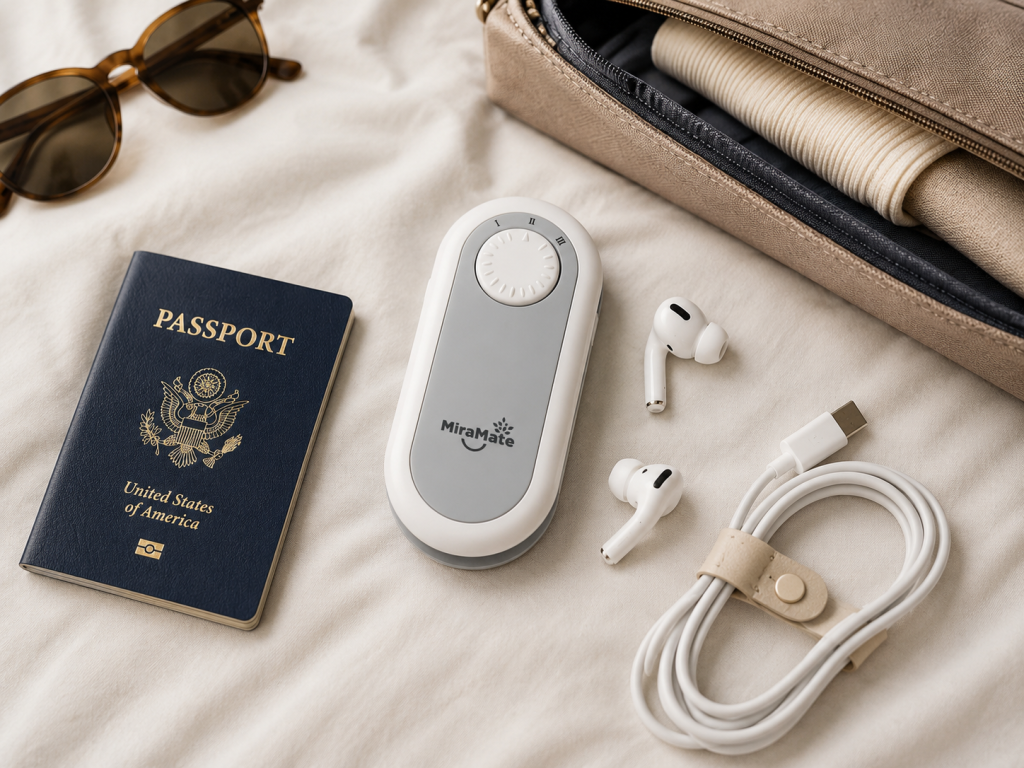
Its compact design makes it practical for:
- Flights
- Road trips
- Hotel stays
- Remote work travel
- Long walking days
- Daily movement routines
And because travel-related physical stress is often localized, many people use it around areas like:
- Neck and shoulders
- Lower back
- Knees
- Feet
- Calves
- Hips
The appeal is not complexity. It is convenience.
Small enough to carry easily. Simple enough to actually use consistently.
Conclusion
Travel will probably always challenge the body a little.
That is part of movement, exploration, unfamiliar environments, and long days away from normal rhythms.
But more people are starting to realize that recovery does not need to wait until they get home.
Sometimes small, practical support during the trip itself can make the entire experience feel different — physically, mentally, and emotionally.
And for travelers who value simplicity, portability, and flexibility, that is exactly where compact tools like Mini Magic begin to make sense.
We also warmly welcome you to join our Facebook group and register for our newsletter for our latest news and promotions.