
Have you ever stood up after sitting for a while and noticed that your foot feels like it has “fallen asleep”? Or perhaps your fingers occasionally feel tingly after spending hours typing, scrolling, or holding the same position.
These sensations are common reminders that our bodies are constantly sending and receiving signals.
Your nerves are part of a complex communication network connecting the brain, spinal cord, muscles, skin, and the rest of the body. They help us sense touch and temperature, control movement, and respond to what is happening around us.
While we rarely think about this communication system during an ordinary day, the way we move, sit, work, and recover can all influence how comfortable our bodies feel.
Modern Life Can Keep the Body Still for Too Long
Many everyday activities require us to stay in the same position for extended periods.
Working at a desk, driving, using a phone, or spending hours in front of a computer may involve relatively little movement while repeating the same small motions again and again.
Over time, the body may begin to feel tight, heavy, or simply in need of movement. You might notice tense shoulders, tired hands, stiff legs, or that familiar “pins and needles” sensation after sitting awkwardly for too long.
This does not mean you need a complicated wellness plan. Often, the first step is simply bringing more variety back into the day.
Simple Ways to Support Everyday Nerve Wellness
Small habits can make a meaningful difference in how your body feels throughout the day.
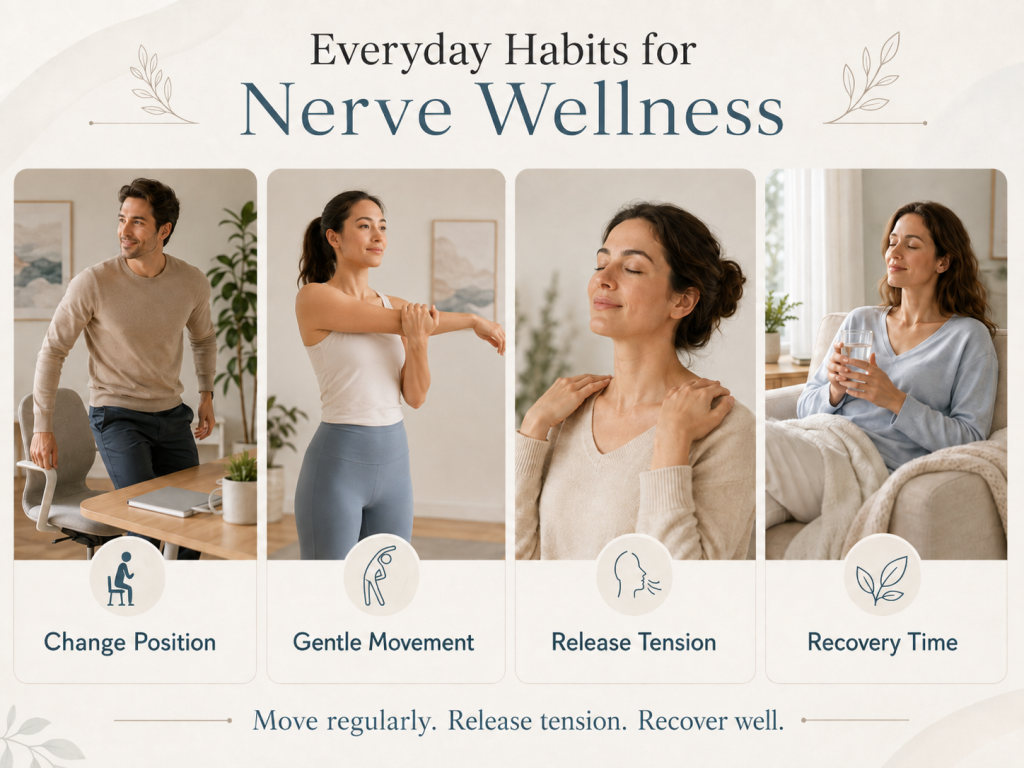
Change positions regularly.
If you spend long hours sitting, stand up from time to time, walk around, adjust your posture, or simply move your arms and legs.
Add gentle movement.
Walking, stretching, and simple mobility exercises can help break up long periods of stillness. A few shoulder rolls, wrist movements, or calf stretches may be enough to help the body feel less restricted.
Notice unnecessary tension.
Many of us unconsciously raise our shoulders, tighten our jaw, or grip a mouse or phone more firmly than necessary. Occasionally checking in with your body can help you release some of that tension.
Make time for recovery.
A busy day often moves directly from work to errands, screens, and other responsibilities. Creating a few quiet minutes to stretch, breathe, or simply lie down can help establish a clearer transition between activity and rest.
A simple idea to remember is:
Move regularly. Release tension. Give your body time to recover.
Where Can PEMF Fit Into the Routine?
PEMF stands for Pulsed Electromagnetic Field technology.
PEMF devices use coils to generate changing electromagnetic fields in a series of pulses. For many people, a PEMF session is simply one part of a broader relaxation and recovery routine.
For example, after a long day of sitting or repetitive work, you might take a short walk, do a few gentle stretches, and then spend some quiet time on a PEMF mat.
This makes PEMF less like another task on your schedule and more like a dedicated moment to slow down.
Consistency can also make the routine easier to maintain. Some people prefer a session during a midday break, while others naturally include PEMF in their evening wind-down time.
A Full-Body Approach With Magic Pro
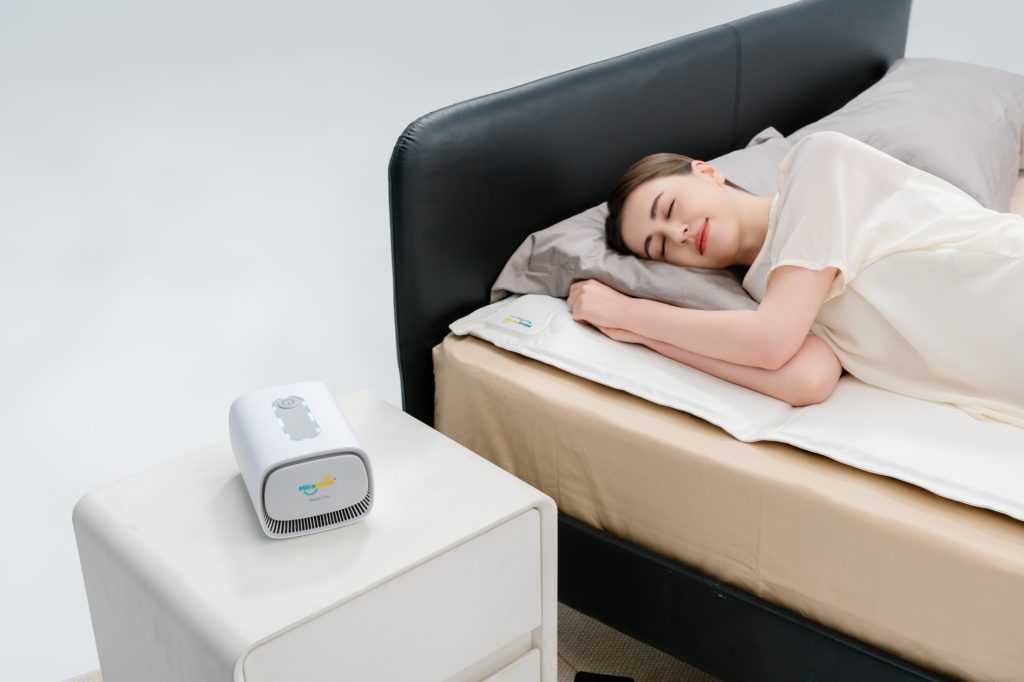
For those who prefer a full-body PEMF experience, MiraMate Magic Pro is designed to make this type of routine easy to use at home.
Its full-length mat contains 96 closely spaced coils, creating broad coverage across the body while you lie comfortably on the mat.
Magic Pro also includes 30 curated programs, giving users different options depending on how they want to structure their wellness time—from relaxation and sleep-focused routines to body comfort, vitality, and more targeted wellness themes.
Instead of treating every day exactly the same, you can choose a program that better matches what you want to focus on during that session.
One of these options is Nerve Support.
Exploring the Nerve Support Program
Nerve Support is part of Magic Pro‘s collection of curated programs and is designed around nerve wellness and balanced communication pathways within the body’s broader wellness routine.
It can fit naturally into the kind of daily habits discussed above.
After spending hours at a desk, for example, you might take a short walk, stretch your shoulders, hands, hips, and legs, and then lie down on Magic Pro for a Nerve Support session.
Or you may prefer to make it part of your evening routine—putting your phone aside, lowering the lights, and giving yourself time to relax while the program runs.
The important part is not making the routine complicated. A wellness habit is usually easier to maintain when it fits naturally into the life you already have.
Listen to the Small Signals Your Body Gives You
We often pay attention to the body only when discomfort becomes difficult to ignore.
But smaller signals—a stiff shoulder, tired hands, a foot that falls asleep after sitting, or the feeling that your body simply needs to move—can be useful reminders to change position, stretch, and slow down.
Persistent or unexplained numbness or tingling can have many different causes and is worth discussing with a healthcare professional. For everyday wellness, however, better movement and recovery habits are a practical place to begin.
Supporting nerve wellness does not need to feel complicated.
Move. Stretch. Relax. Recover.
And if PEMF is part of your wellness routine, Magic Pro and its Nerve Support program offer a simple way to turn that recovery time into a more intentional part of your day.