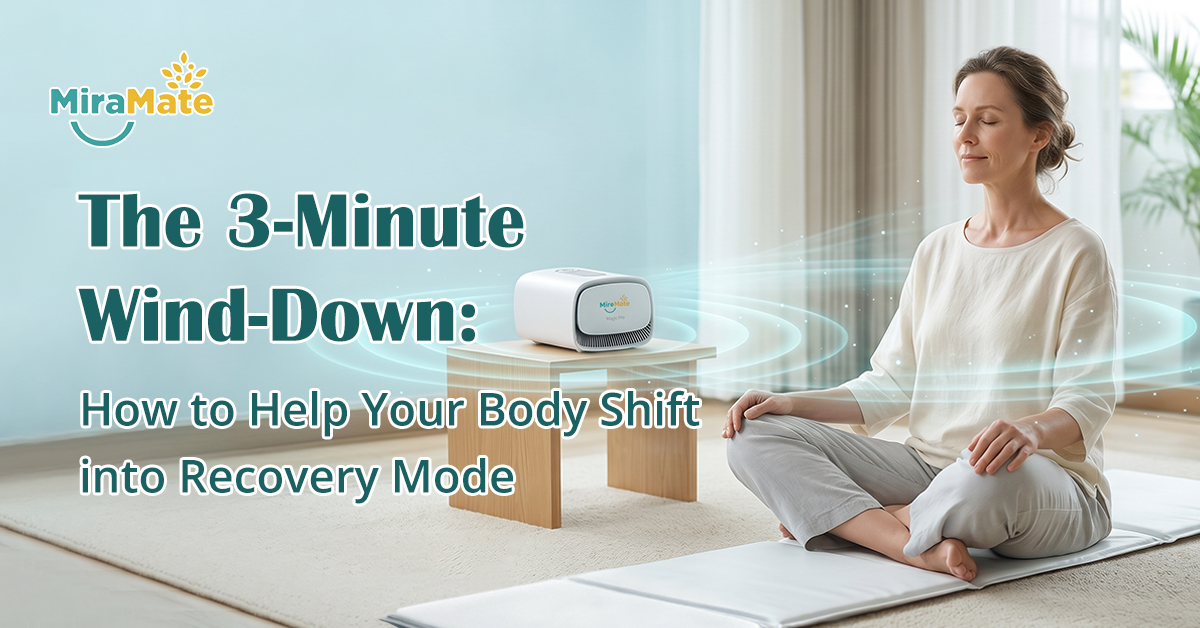
You finally sit down after a long day. The laptop is closed. The messages can wait. The house is quiet enough.
But your body has not received the memo.
Your shoulders are still tight. Your mind keeps jumping from one thing to the next. Your breathing feels shallow. You are tired, but not relaxed. Resting, but not really recovering.
This “tired but wired” feeling is one of the most common signs that your body is having trouble shifting out of high alert. You may not need more willpower. You may simply need a better signal that it is safe to slow down.
That is where a short, intentional wind-down routine can help.
Why Your Body Can Feel Stuck in High Alert
Stress is not only a thought. It is also a physical state.
When life demands focus, speed, decisions, and constant attention, your body naturally moves into a more alert mode. Your heart rate may rise. Your muscles may tighten. Your breathing may become faster or more shallow. The American Psychological Association notes that muscle tension is one of the body’s reflex reactions to stress.
This response is useful when you need to handle pressure. The problem is that modern life often keeps that pressure going for too long.
Emails, traffic, notifications, deadlines, family responsibilities, and screen time can keep your system switched on even after the demanding part of the day is over. Your mind may know it is time to rest, but your body may still be acting as if there is one more thing to solve.
That is why simply telling yourself to “relax” often does not work. The body usually responds better to signals than instructions.
A good wind-down routine gives your body those signals: slower breathing, softer attention, less tension, and a more grounded physical state.

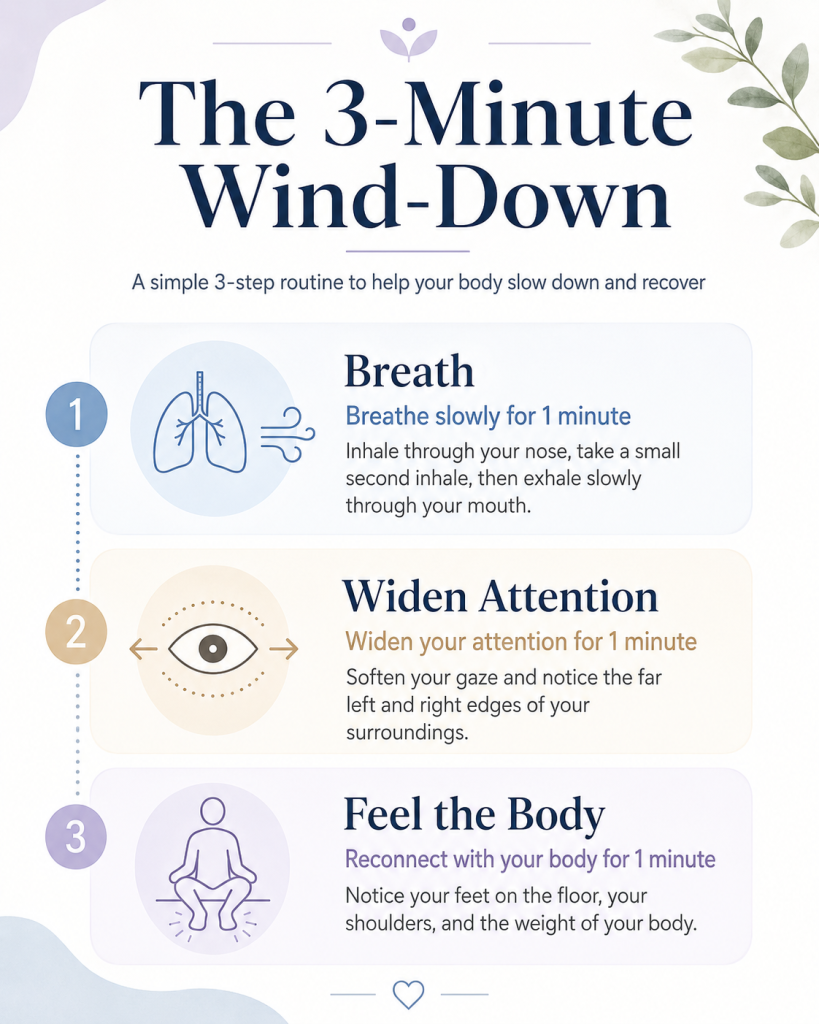
The 3-Minute Wind-Down Routine
You do not need a perfect meditation setup. You do not need an hour of free time. Start with three minutes.
This short routine is designed to help your body move from “still on” toward a more recovery-friendly state.
Minute 1: Slow the Breath
Sit or lie down somewhere comfortable. Relax your jaw and drop your shoulders.
Take a slow inhale through your nose. At the top of the breath, take a small second inhale. Then exhale slowly through your mouth.
Repeat this for about one minute.
This type of breathing gives your body a clear physical cue to soften. Mayo Clinic lists deep breathing as one of the common relaxation techniques that can help slow breathing and focus attention.
Do not worry about doing it perfectly. The goal is not performance. The goal is to create a little more space in your body.
Minute 2: Widen Your Attention
When we are stressed, our attention often becomes narrow. We stare at the screen, the problem, the message, or the task.
For the second minute, let your gaze soften. Look straight ahead, but gently notice what is on the far left and far right of your vision. You can also slowly look around the room and name three things you see.
This gives your brain a different kind of input. Instead of locking onto one pressure point, you are helping your attention open up again.
It is a small shift, but it can make the moment feel less tight.
Minute 3: Feel Your Body Again
For the final minute, bring your attention to your feet, legs, back, or hands.
Feel your feet on the floor. Notice the weight of your body on the chair or bed. Let your shoulders drop a little more. If one area feels tense, simply notice it without trying to force it away.
This is a basic body scan. Mayo Clinic describes body scanning as a meditation technique where you bring attention to how different parts of the body feel, including tension, warmth, or relaxation.
By the end of three minutes, you may not feel completely transformed. That is not the point. The point is to interrupt the stress loop and give your body a path toward recovery.
Why Recovery Mode Needs Consistency
One short routine can help, but consistency is what makes it meaningful.
Your body learns through repetition. When you create a familiar wind-down pattern at the end of the day, your system begins to recognize it: this is the time to slow down, release tension, and recover.
That routine might include dimming the lights, putting your phone away, stretching gently, drinking water, or using a wellness tool that helps you stay consistent.
This is where PEMF can fit naturally into a modern recovery routine.
Where MiraMate Magic Pro Fits In
PEMF stands for Pulsed Electromagnetic Field. Many people use PEMF as part of their wellness routine to support relaxation, daily recovery, body comfort, and a more intentional rest environment.
MiraMate Magic Pro is designed as a full-body PEMF mat for home use. It features 96 coils across the mat for more even head-to-toe coverage, up to 1013.3 Gauss peak intensity per coil, and 30 curated programs designed around common daily wellness needs such as relaxation, sleep, inflammation support, and daily balance. It also uses Audio-driven Analog PEMF, allowing users to use their own audio for a more personalized experience.
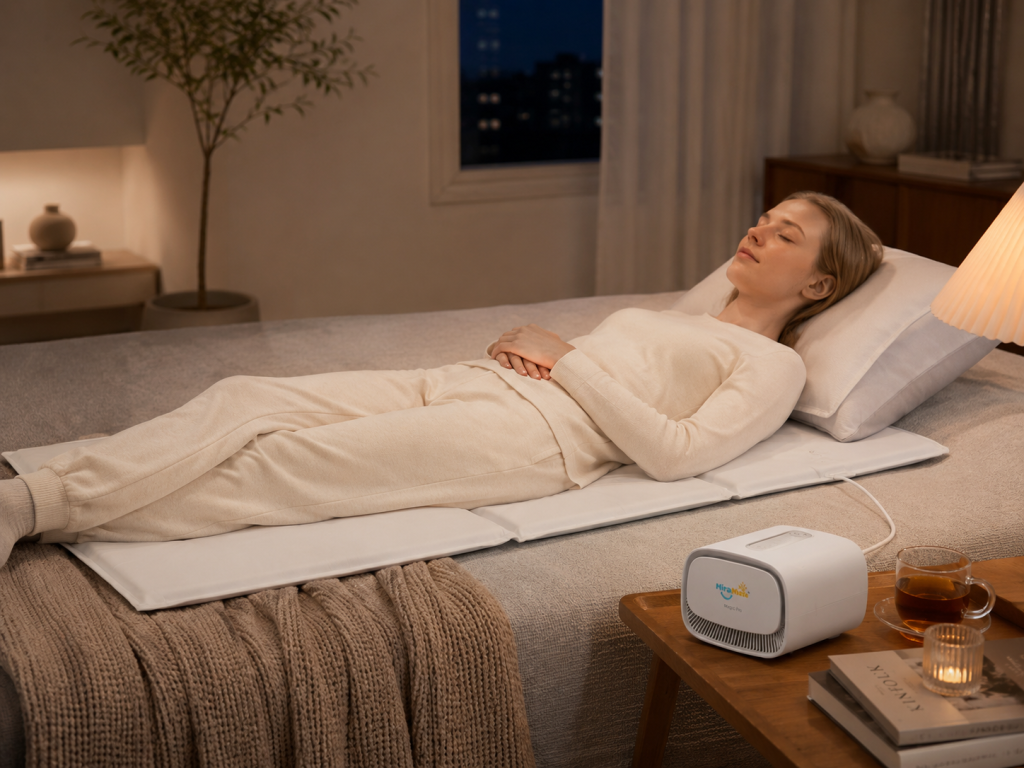
The benefit of Magic Pro is not that it replaces your wind-down habits. It helps you build a more complete environment around them.
After your 3-minute routine, you can lie on Magic Pro and choose a program that fits your goal for the moment. For example, you might use it in the evening while reading, practicing slow breathing, listening to calming audio, or simply giving your body time away from screens.
Because Magic Pro is a full-body mat, it is especially suited for people who want a more immersive home wellness routine instead of only targeted support. The 96-coil design is intended to create more consistent coverage across the full mat, which can make the experience feel more balanced during a session.
A Simple Evening Routine to Try
Here is a simple way to combine the 3-minute wind-down with Magic Pro:
Start by turning off unnecessary notifications. Sit or lie down and complete the three steps: slow your breath, widen your attention, and feel your body again.
Then move into a Magic Pro session. Choose a program that matches your routine, keep the environment quiet, and let the session become your transition between the demands of the day and the recovery your body needs.
You can use this routine after work, before bed, or anytime your body feels overstimulated and needs a calmer rhythm.
Conclusion
Recovery does not always begin with a big lifestyle change. Sometimes it begins with three quiet minutes.
When you give your body simple, repeatable signals, it becomes easier to move out of high alert and into a more settled state. Breathing, body awareness, and a consistent PEMF routine can work together to create a more supportive recovery space at home.
Magic Pro is designed for people who want that kind of daily support: simple to use, full-body, and built for a consistent wellness routine.
Your body works hard for you all day. Give it a clear way to come down.